Showing posts with label invasive species. Show all posts

Saturday, July 11, 2026

New York to Try Novel Approach to Control Spotted Lanterfly

spotted lanternfly
adult spotted lanternfly (photo from Gardenia.net)

compiled from several sources

Although Spotted Lanternflies have so far been confirmed only in six southeastern Michigan counties, they are certainly on the spread. This relatively new invasive pest has been in the United States since 2014 when it was found in Pennsylvania.

They do not bite or sting, but they can damage plants. They exude a sticky substance called honeydew, which attracts other insects such as wasps or bees. The honeydew can also mold.

A large infestation of them can restrict the ability of plants to photosynthsize. Of particular concern are vinyards.

Watkins Glen, in western New York, is in the heart of wine and fruit country. The Finger Lakes Land Trust is trying a novel approach to control the pests. The lanternflies came from Asia, as did the invasive Ailanthus, or Tree of Heaven. This tree is the primary food source of the lanternfly larvae.

Tree of Heaven is being agressively removed from the park with a few exceptions. A few male trees (Tree of Heaven has male and female trees) are being allowed to live, but are being injected with an insecticide that will kill the lanternfly larvae.


See NPR article


These links are checked on the date of the article. As the article ages, some links may become invalid

Go To www.getoffthecouchnews.blogspot.com for all the news
See Get Off The Couch


Friday, July 10, 2026

Boat Washing Stations Help Stop Aquatic Invaders

boat washing station
mobile boat washing station (photo from Crystal Lake Watershed)

compiled from several sources

To stop the spread of aquatic invasive species the advice for several years has been "Clean, Drain, Dry." (CD3) If boats and trailers are cleaaned properly after removing them from lakes, it can stop such species as Zebra mussels, Eurasian watermilfoil, and Asian apple snails.

In March 2019, a law was passed in Michigan that requires thorough cleaning of all watercraft and trailers whether motorized or not, emptying of all water from the craft, and it also restricts disposal of fish and bait.

There are now thousands of washing stations throughout Michigan on many popular boating and fishing lakes and waterways. No comprehensive list yet exists, but web searches can find these stations in local areas.

The Michigan State University "Clean Boats, Clean Waters" program will also work with local organizations to increase awareness of aquatic invasive species and boat cleaning practices by hosting a free Mobile Boat Wash event in their community. The MSU trailer-mounted boat cleaning systems use heated high-pressure water that is effective in cleaning most invasive species from boats and trailers. A containment mat prevents runoff back into lakes and rivers.

In some locations a waterless solar-powered kiosk provides tools like vacuums, brushes, and pullers for watercraft.


See Stop Aquatic Hitchikers


These links are checked on the date of the article. As the article ages, some links may become invalid

Go To www.getoffthecouchnews.blogspot.com for all the news
See Get Off The Couch


Friday, June 26, 2026

Pere Marquette, Pentwater, White Rivers to Be Treated for Sea Lampreys

sea lamprey
sea lamprey in an aquarium (photo by jhy)

from a news release of US Fish and Wildlife Service

US Fish and Wildlife Service personnel will apply lampricides to the Pere Marquette River (Mason and Lake Counties) to kill invasive sea lamprey larvae burrowed in the stream bottom. Applications will be conducted between July 6 and 10, 2026, in accordance with State of Michigan permits. Application dates are tentative and may be changed due to either stream or weather conditions.

Sea lampreys are native to the Atlantic Ocean, but invaded the Great Lakes through shipping channels in the early 1900s. They attach to fish with their circular mouths lined with teeth and suck body fluids. Each lamprey can consume about 40 pounds of fish, and each spawning pair can produce 100,000 eggs. They must be controlled regularly in the larval stage.

Although the lampricide is not applied in a concentration high enough to harm humans, it is recommended that people stay out of the water during treatment. The water should not be used for agricultural purposes on the day of treatment. By implication, using river water for camping needs on these days would also be unwise.

The Pentwater and White Rivers will also be treated this summer.

For more information, call 1-906-226-6571.


See Great Lakes Fisheries Commission


These links are checked on the date of the article. As the article ages, some links may become invalid

Go To www.getoffthecouchnews.blogspot.com for all the news
See Get Off The Couch


Friday, June 19, 2026

Report Lily Leaf Beetles to MSU

lily leaf beetle
lily leaf beetle (photo from MSU)

from an article at Click on Detroit

The lily leaf beetle, also called scarlet leaf beetle, was introduced into North America around 1940. By 1992 it had spread across New England, and was confirmed in Michigan in 2016.

It attacks plants in the Lilium and Frittilaria families which include oriental lilies, frittilaria, hosta and a few other plants in the Lily family including Solomon's Seal and possibly Swamp Milkweed. However, day lilies are not at risk. The beetle larvae can completely devastate a plant.

Adults burrow into the soil near their host plants and wait until the next year to emerge and lay eggs.

There is now a significant population in southeast Michigan. Michigan State University Extension is seeking reports of sightings to determine where the insects have spread.

MSU is looking into a biological control program used by the University of Rhode Island that introduces a parasitic insect that targets the larvae of lily leaf beetles.

Any sightings of this insect should be reported, preferably with pictures of plant damage to MSU. See link below. Individual beetles can be killed by dropping into soapy water.


Report Lily Leaf Beetle to the Midwest Invasive Species Network


These links are checked on the date of the article. As the article ages, some links may become invalid

Go To www.getoffthecouchnews.blogspot.com for all the news
See Get Off The Couch


Saturday, June 6, 2026

Method May Be Effective against Japanese Knotweed

japanese knotweed and hardware cloth
Japanese knotweed trying to grow through hardware cloth (photo from Japanese Knotweed Solutions, Ltd.)

from Vermont Invasives

Vermont Invasives suggests a non-chemical way to kill small stands of Japanese Knotweed, Fallopia japonica. Japanese Knotweed aggresively forms dense mats of vegetation that crowds out any other plant, stealing nutrients and diversity. (the editor of GOTC calls it the "Kudzu of the north.")

If you don't have acres of knotweed to eradicate, this method has proved effective in Great Britain.

Buy hardware cloth (metal mesh) with half-inch squares. In early spring, clear off the dead stalks and detritus from previous years. Lay the hardware cloth over the growth area and stake it down firmly.

As the new shoots push up through the metal mesh, they will grow and soon be girdled and die. The plant will attempt to send up new shoots. Same result. Eventually, the carbohydrate stores in the rhizomes will be depleted and the plant will die.

Total control can still take multiple years, and you have to make sure new shoots don't escape the sides of the mesh, but it is a low-risk, and safe method of treatment.


These links are checked on the date of the article. As the article ages, some links may become invalid

Go To www.getoffthecouchnews.blogspot.com for all the news
See Get Off The Couch


Monday, April 27, 2026

New Threat from Balsam Wooly Adelgid in Michigan

balsam wooly adelgid
balsam wooly adelgid (photo from USDA Forest Service)

from Michigan DNR

Balsam woolly adelgid can infest true fir trees, including balsam, Fraser and concolor (white) fir in forests and landscapes in Michigan. Balsam fir can be found in conifer and mixed hardwood/conifer forests of Michigan's Upper and Northern Lower peninsulas. Unlike hemlock wooly adelgid, there are many more obvious symptoms of infected trees including loss of crown needles, swollen twigs, and white scale on the bark in addition to the small white eggs around the needles.

Balsam woolly adelgid is a sap-feeding insect that attacks true fir trees, including balsam, concolor (white) and Fraser fir. Repeated attacks weaken trees, cause twig gouting, kills branches and, over the course of several years, cause trees to die. There are nearly 1.9 billion balsam fir trees in Michigan's forests. As the third largest Christmas tree-growing state in the country, Michigan produces nearly 13.5 million fir trees each year, grown on over 11,500 acres. True fir trees, including forest, landscape and Christmas trees, are susceptible.

Balsam woolly adelgid can be introduced on infested nursery stock, Christmas trees, firewood or tree products. Though the insects don't move far on their own, they can be carried by wind, wildlife, humans or vehicles to new locations.

Adelges piceae (Ratzeburg), an invasive sap-feeding insect, were identified in lower Michigan in fall 2023. This tiny insect is native to Europe but has probably been introduced into North America multiple times.

Balsam wooly adelgid was found in 2023 Missaukee County. Since then, more infestations of BWA have been identified on balsam fir in forests in Missaukee and Clare counties. Osceola County, Marion Township is also subject to quarantine.


See much more and photos as Michigan State Univeristy


These links are checked on the date of the article. As the article ages, some links may become invalid

Go To www.getoffthecouchnews.blogspot.com for all the news
See Get Off The Couch


Sunday, March 15, 2026

Funding throughout Michigan for Invasives Control

wooly adelgid management
wooly adelgid management (photo from MI DNR)

a news release of Michigan DNR

The state of Michigan announced on March 11, 2026 that 27 projects will share $2.4 million in funding through the Michigan Invasive Species Grant Program for efforts that address the prevention, detection, eradication and control of aquatic (water-based) and terrestrial (land-based) invasive species.

The program – cooperatively implemented by the Michigan departments of Agriculture and Rural Development; Environment, Great Lakes, and Energy; and Natural Resources – has four key objectives:
• Preventing the introduction of new invasive species.
• Strengthening the statewide invasive species early detection and response network.
• Limiting the spread of recently confirmed invasive species.
• Managing and controlling widespread, established invasive species.

Michigan’s 22 regional cooperative invasive species management areas (CISMAs) will each receive $70,000 in annual support to provide education and technical assistance to landowners. Additional funds for survey and treatment of high-priority invasive species including red swamp crayfish, water-primrose, wild parsnip, black swallowwort, knotweeds and kudzu will go to twelve of the areas.

Some West Michigan projects are:
• Surveying and treating hemlock woolly adelgid on the northern edge of the infestation in Benzie, Grand Traverse, Leelanau and Manistee counties along the Lake Michigan shoreline.
• Conducting survey and treatment of mile-a-minute weed infestations in Calhoun County.
• Surveying for highly invasive hydrilla in southwest Michigan waters near the known infestation in Berrien County.


These links are checked on the date of the article. As the article ages, some links may become invalid

Go To www.getoffthecouchnews.blogspot.com for all the news
See Get Off The Couch


Saturday, February 7, 2026

"Rock Snot" Found in Michigan

Events Calendar

rock snot
rock snot (photo by Thorney- Creative Commons)

from Bridge Mi

In the summer of 2015, "rock snot" was found in the Upper Manistee River, which should have been cold and clear trout waters. "Rock snot" is the nickname given to Didymosphenia geminata and also shortened to didymo. It is a diatom that coats rocks and branches with an unpleasant-looking slime. After the 2015 discovery, it bloomed again in 2021.

It has not yet been determined if the organism is native or invasive in Michigan. No one even knows what causes the blooms.

Didymo can temporarily ruin fishing habitat and make recreation unpleasant. Jo Latimore, aquatic ecologist, outreach specialist and director for Michigan State University’s Extension Center for Lakes and Streams, says “We’re worried about it because, even if it was here all along, it sure is acting differently than it was before. Even if it is a native species, it may be an indicator that something is out of whack in these waterways.”

Cells have been found on the Manistee and Jordan Rivers in west Michigan, and also on the Au Sable and St. Mary's Rivers. It reproduces asexually, so a single cell can start a colony.

It is not a hazard to human health, but is unsightly. The stalk can attach to rocks, plants, or other submerged surfaces. When it divides, eventually a mass of branching stalks forms. This slime is primarily polysaccharides and protein, forming complex, multi-layered structures that are resistant to degradation.


See Didymosphenia geminata at Wikipedia


These links are checked on the date of the article. As the article ages, some links may become invalid

Go To www.getoffthecouchnews.blogspot.com for all the news
See Get Off The Couch


Wednesday, January 28, 2026

Armadillos in Michigan?

Events Calendar

nine banded armadillos
nine-banded armadillos (photo from Bridge Michigan)

from an article in Bridge Michigan

Yes, nine-banded armadillos, dead ones at any rate, have been found in Michigan. Between 1989 and 2022 there have been five confirmed sightings, mostly in the southernmost counties, and all were dead in the road. Two were from Ottawa County and one each from Ionia, Luce, and Saginaw counties. There is also one photo submitted to iNaturalist, supposedly from the UP. This may be a hoax.

Wildlife officials do not agree as to how they got there. Some suggest they were brought into the state and discarded here. Others think that their movement into the state is inevitable, given climate change.

Agreement can't be reached as to whether it would be good or bad to have armadillos here. They burrow and cause structural damage. On the other hand, they eat ants and cockroaches.

Armadillos migrated from Mexico and into southern states in the 1840s. By the 1920s, they were found in Florida in the 1920s. Their distribution has spread northward to Illinois, Ohio and Indiana.

They would not be able to survive Michigan winters like the one we are having this year.


See Armadillo on Wikipedia


These links are checked on the date of the article. As the article ages, some links may become invalid

Go To www.getoffthecouchnews.blogspot.com for all the news
See Get Off The Couch


Sunday, January 11, 2026

MDARD Requests Feedback on New Invasive Species Listings

Events Calendar

Japanese Barberry
Japanese Barberry (photo by jhy)

a news release of Michigan DNR

The Michigan Department of Agriculture and Rural Development (MDARD) is inviting Michigan stakeholders to provide comments on proposed additions to the invasive plant species regulated in the Natural Resources and Environmental Protection Act (NREPA)(1994) Part 413. MDARD is proposing these additions based on rigorous, scientific Weed Risk Assessments that indicated six invasive plant species could harm Michigan’s environmental, economic, and/or human health. Preventing the spread of invasive species is important to help safeguard the quality of Michigan ecosystems, the strength of Michigan’s economy, and the health of people in Michigan.

A Weed Risk Assessment is available for each of the proposed species:
• Common buckthorn
• Glossy buckthorn
• Callery pear [Bradford pear]
• Japanese barberry
• Water hyacinth
• Water lettuce

If the proposed species are added to the NREPA Part 413 Restricted and Prohibited lists, then it will be illegal to introduce, import, transplant, sell, or intentionally possess them in Michigan. However, a person isn’t considered to be in violation of the rules if they unknowingly have invasive species established on their lands or in waterways.

Please use the online survey to provide comments on the proposed additions to the Restricted and Prohibited lists by 11:59 pm EST on Monday, February 9, 2026. Your input is important and will help ensure that any regulatory changes are well-informed and appropriate. After the public comment period, MDARD will review all feedback and determine if any changes need to be made to this proposal. All changes will be presented to the Michigan Commission of Agriculture and Rural Development.

To read more detail about each plant, please follow the link above and find links to a document on each species.


Take the Survey


These links are checked on the date of the article. As the article ages, some links may become invalid

Go To www.getoffthecouchnews.blogspot.com for all the news
See Get Off The Couch


Thursday, January 8, 2026

Hope in the Story from Mentor Marsh

Events Calendar

Phragmites australis
seed heads of Phragmites australis (photo by from a video by the Great Lakes Phragmites Collaborative)

based on a story from Great Lakes Phragmites Collaborative


All too often, you may have seen stands of tall tan grass dominating marshes and crowding out all other plants. Perhaps you wondered if this was a healthy ecosystem, and if something should be done.

If what you have noticed is Phragmites australis (frag-MY-teez) it's a biological disaster. Not many places are working on solutions. But the city of Mentor, Ohio, near Clevland has set an example that could be followed elsewhere.

Mentor Marsh, located in north-eastern Ohio is a success story at removal of the invasive and aggressive Phragmites grass. It forms dense mono-cultures, out-competing native plants.

The marsh covers approximately 800 acres. Beginning in the 1960s, the dumping of waste from a nearby salt production facility increased the salt levels in a tributary stream. Since Phragmites will tolerate salt water, it moved in, quickly displacing native vegetation in Black Brook Creek which flows into the marsh, a former channel of the Grand River.

Phragmites grows so densely packed that the dead stalks become a fire hazard. Since the 1980's there have been twelve major fires at the site, threatening nearby homes. The most recent fire, in 2013, destroyed the boardwalk by which people could access the marsh. When that was rebuilt, workers cleared Phragmites from a ten-foot buffer on each side of the pathway. Native plants quickly returned to this space.

The Cleveland Museum of Natural History manages the marsh. In collaboration with Lake County Soil and Water Conservation district, plans were drawn up to restore the entire site. Over subsequent years, an approved herbicide was both sprayed on the plants, and hand applied. Spraying gives better results with more even application, preventing localized high dosages. Low dosages protected sensitive wildlife. After the plants were dead, marsh buggies were used to reach all areas and remove the Phragmites.

Over 200 million native-plant seeds were then introduced, both by helicopter and by hand.

Biodiversity has returned, both of plants and wildlife. Ongoing monitoring will assure that the Phragmites does not return.

There is a native Phragmites that is not aggressive, but it's seldom found anymore since P. australis has spread throughout the United States.

Watch a 2-minute video of the transformation of Mentor Marsh:


These links are checked on the date of the article. As the article ages, some links may become invalid

Go To www.getoffthecouchnews.blogspot.com for all the news
See Get Off The Couch
Wednesday, October 29, 2025

Michigan Invasive Species Funding Reduced

alt text
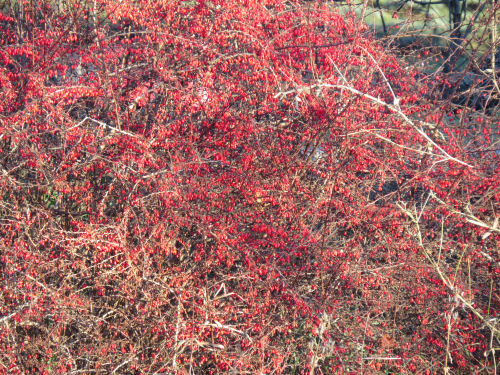
autumm olive in bloom (photo by jhy)

read the full DNR news release at The Michigan DNR

Funding for the Michigan Invasive Species Grant Program will be less than anticipated for the current grant cycle. The state’s fiscal year 2026 budget allocates $2.4 million for the program, down $1.2 million from the $3.6 million provided in previous years.

Deadlines and program goals and priorities outlined in the MISGP handbook, issued by the Michigan Department of Natural Resources on Sept. 2, 2025, remain unchanged. Full project proposals are due Nov. 1. The grant awards announcement is anticipated in March 2026.

“The timing of the grant cycle makes it necessary to announce the funding opportunity in September so funding can be awarded in March,” said Joanne Foreman, DNR communications specialist for the Michigan Invasive Species Program. “Since the announcement generally comes before the state budget is complete, we are careful to note that funds are anticipated, not guaranteed.”

Grant administrators are committed to maintaining the network of 22 cooperative invasive species management areas, or CISMAs, that serve citizens in all 83 Michigan counties. Eligible CISMA requests for up to $70,000 for annual implementation of prevention, detection and control activities will be granted.

Remaining funds will be available for priority projects and CISMA survey and treatment projects on a competitive basis. Important program dates and information

Local, state, federal and tribal units of government, nonprofit organizations and universities may apply for funding to support invasive species projects in Michigan.

Grant requests for general projects can range from a minimum of $25,000 to a maximum of $400,000. CISMAs can request up to $70,000 for annual implementation of prevention, detection and control activities and up to $40,000 for specific outreach and/or survey and treatment projects.

There are no match requirements for the program, and match documentation will not be accepted as part of the application.

See Autummn Olive- Beautiful and Terrible

These links are checked on the date of the article. As the article ages, some links may become invalid

Go To www.getoffthecouchnews.blogspot.com for all the news
See Get Off The Couch


Thursday, July 24, 2014

Sea Lamprey Treatment Scheduled for Pere Marquette

sea lamprey mouth
sea lamprey (photo by jhy)

based on a news article in the Oceana Herald Journal, from the U.S. Fish and Wildlife Service

Every three to five years the U.S. Fish and Wildlife Service treats infected Great Lakes tributaries with lampricides to control the devastating populations of sea lamprey. Larvae burrow in the mud of stream bottoms and, if not eliminated, grow to the adults that parasitize and kill fish.

Permits from the State of Michigan have been issued for treatment of the Pere Marquette River, to be completed between July 29 and August 7. A firm date cannot be established ahead of time because application depends upon weather and local stream conditions.

The lampricides used will be Lampricid and Bayluscide. These have been tested as posing no risk to humans at the concentration levels used for treatment. However, it is advised to minimize unnecessary exposure. There is some risk to certain fish, insects and broadleaf plants. Confined bait or other animals in the river should be moved because there is greater risk to crowded populations. In addition, no river water may be used for irrigation for a period of 24 hours following treatment.

Monitoring will be carefully conducted. Dye may be observed in the river as streamflow is gauged.

For further information, call 1-800-472-9212.

Like This!


See Pheromones May Aid in Controlling Sea Lamprey
These links are checked on the date of the article. As the article ages, some links may become invalid

Go To www.getoffthecouchnews.blogspot.com for all the news
See Get Off The Couch


Friday, February 17, 2012

Izaak Walton League Works for Asian Carp Control


asian carp
Asian Carp

from the Izaak Walton League

Our fellow Ike’s, on the Great Lakes Committee, have a tremendous problem with Asian Carp working their way up the Mississippi River. Below is a message from Jill Crafton, chairperson of the Great Lakes Committee, bringing the other members of
the GLC up to date on some of their action. This is a preview of what we would have if the carp get established in the Great Lakes.

"Dave Zentner and I have been participating in a coalition to stop Asian Carp from moving further up the Mississippi River and into the Minnesota and St. Croix Rivers. We have been working since April via conference calls and various meetings with DNR, Governor, and/or Corps (John Goss showed for that one hosted at DNR) to push for action. There was representation from a Task Force of scientists, USFW, USGS, and MN DNR.

“The latter developed a comprehensive strategy that includes sampling and
monitoring for eDNA at various points in the river, discussing triggers for positive eDNA hits (lock and dam closure is the only sure solution) etc. The Governor has held a couple of Summits on Asian Carp and is demanding action. One Congressional leader is drafting legislation that would help resolve barriers to Corps ACTING to close a lock and dam.

"Our new Mississippi River staffer working under Brad Redlin is supporting us
and is amazing in the experience and gumption she brings to the table. The Non-profit contingent of our MN AIS Coalition has engaged the media on a couple occasions which culminated in a media press event to call for action. Since the locks are closing for the winter, the task was for a modified lock closure plan to be
ready before opening the locks in the spring.

"Zentner, and others from Friends of Mississippi, MN Responsible
Property Owners (fighting AIS in MN lakes), and MN Conservation Federation made statements and fielded questions on the need for action, the urgency for solutions, impact on navigation and effectiveness of barriers. Zentner was awesome in keeping the focus on the need for urgency and action."


Contact Jill Crafton

Go To www.getoffthecouchnews.blogspot.com for all the news
See Get Off The Couch


Sunday, November 15, 2009

"Lake Invaders: The Fight For Lake Huron" to Premier in GR

Lake Invaders - 3:00 Trailer from john schmit on Vimeo.

OutdoorBlips: vote it up!
if you like this article, click the Blip chiclet!
a news release of Michigan DNR

"Lake Invaders: The Fight for Lake Huron," a documentary film produced by faculty and students at Grand Valley State University in Allendale, will have its premiere screening at 7 p.m. Friday, Nov. 6, at the Loosemore Auditorium in DeVos Center, located at 401 W. Fulton in Grand Rapids.

The film explores the threat invasive species have posed on Lake Huron, which has been invaded by more than 180 exotic species in the last century. Two years in the making, the film features Department of Natural Resources staff at the Alpena Fishery Research Station and the DNR research vessel Chinook.

Specialists from GVSU's Annis Water Resources Institute in Muskegon consulted on the project and spoke to students who filmed the documentary. The film, in part, traces the history of the Chinook research vessel, first launched in 1947 when Lake Huron was invaded by sea lamprey.

DNR staff at the Alpena research station has studied invasive species in the lake for more than 60 years, including sea lamprey, alewives, zebra mussels and round gobies.

Jim Johnson, DNR research biologist and manager of the Alpena Fishery Research Station, helped facilitate the filming of the documentary with his daughter, Laura Johnson, who recently graduated from GVSU and conceived the idea for the documentary. Johnson helped connect the students to the Lake Huron Technical Committee, a group of international biologists who share fishery and resource management responsibilities for Lake Huron. Johnson and staff at the research station also took the student film crew on the Chinook to show the work they do on Lake Huron.

See Lake Invaders
These links are checked on the date of the article. As the article ages, some links may become invalid

Go To www.getoffthecouchnews.blogspot.com for all the news
See Get Off The Couch


Tuesday, September 22, 2009

Zebra Mussels Found at Isle Royale

zebra mussels
zebra mussels (photo by Ron Dermott from the US FWS)
OutdoorBlips: vote it up!
if you like this article, click the Blip chiclet!
a news release of Duluth News Tribune

Michigan's crown jewel in Lake Superior, Isle Royale, had escaped the invasion of the alien zebra mussels, until recently. Park officials confirmed the find and are very concerned since the island still has one of the largest populations of native mussels in the Great Lakes.

Superintendent Phyllis Green said that with so many boats coming to the island, they will probably never know how the invaders arrived. She is calling for an all-out effort to attempt to wipe out the colony. It is believed that they are all zebra mussels, and not the larger Quagga mussel, and are almost all located at the west end of the island in Washington Harbor.

The first zebra mussels in Lake Superior appeared in Duluth 20 years ago. They are moved around primarily by being attached to boats. So far 24 mussels have been removed from Isle Royale docks, and water tests are being done to check for larvae (called veligers). Poison could be used to kill the larvae.

An expert from Minnesota Sea Grant pointed out that very few efforts at eliminating zebra mussel concentrations in lakes have succeeded. But he is hopeful that this problem may have been caught early enough.

See Biological Pesticide Found for Zebra Mussels
See 330 Trillion Quagga Mussels Can't Be Right
These links are checked on the date of the article. As the article ages, some links may become invalid

Go To www.getoffthecouchnews.blogspot.com for all the news
See Get Off The Couch


Thursday, July 16, 2009

'Tis the Season for Botulism Deaths

round goby
round goby (photo from Great Lakes for All)
OutdoorBlips: vote it up!
compiled from several sources

Once again, mid summer, the Lake Michigan shore, particularly in Leelanau County, is littered with dead seagulls. For years it's been known that they have died of botulism.

But the story has a deep twist, tied to invasive species.

At the bottom of the lake reside a blanket of invasive mussels: the zebra mussels, long known for their problematic clogging of water intake pipes, and the large quagga mussels. Along came the round goby, another invasive species. The fish eat the zebra mussels. So this should be a good thing, right? Maybe not. They also ingest and concentrate the Type E botulism toxins that the zebra mussels filter from the sediments.

Sport fish, particularly walleye, eat the gobies, and the toxin is carried farther up the food chain. Seagulls feed on the fish, and the result is occasional spectacular die-offs of the birds. Last year, nearly 2900 gulls died from this effect.

This year, as the St. Lawrence Seaway celebrates its 50th year, some people blame that engineered waterway for the entrance of the invasive species to the Great Lakes.

See Zebra Mussels and Round Goby: A Dangerous Combination
See A wake would be fitting for seaway's 50 years
See Type-E Botulism Confirmed in Waterfowl Deaths
See 330 Trillion Quagga Mussels Can't Be Right
These links are checked on the date of the article. As the article ages, some links may become invalid

Go To www.getoffthecouchnews.blogspot.com for all the news
See Get Off The Couch


Saturday, April 25, 2009

Pheromones May Aid in Controlling Sea Lamprey

sea lamprey mouth
sea lamprey mouth (photo by JHY)
based on a news article in the County Press, "Pheromones in river traps attract sea lampreys," by Jack Johnson, April 22, 2009

At Michigan State University field tests have begun to trick sea lampreys to enter traps. The sea lamprey is one of the most devastating parasitic fish to have entered the Great Lakes. They were first found here in the 1920s, entering through locks that bypassed Niagara Falls.

But a study by Weiming Li, an MSU fisheries and wildlife professor, revealed that male lampreys release a pheromone that attracts females. They analyzed the structure and were able to imitate the chemical. Now they are using it to manipulate the lampreys bahavior.

sea lamprey
a lamprey attempts to attach to a handler at the AFFEW Earth Day event on April 18 (photo by JHY)


Initial tests on the Ocqueoc River between Rogers City and Cheboygan show that traps with the pheromones are twice as effective as those without it.

The lampreys eat away at Lake Trout, eventually killing the larger fish. Over a lifetime one lamprey can eat about 40 pounds of fish, and in the 1950s there were 3 million lamprey in the Great Lakes. However, the discovery of TFM, a lampricide has reduced the population to about 450,000. It is used by treating the streams where lamprey larvae grow. TFM has little effect on the rest of the ecosystem, and it’s discovery was a joint US/Canadian effort that tested over 6000 chemicals. Currently the US spends about $10 million a year on lamprey control, and Canada, $8 million.

But there are still too many lamprey. This summer, ten Michigan streams will be fitted with the pheromone-laced traps, four tributaries of Lake Superior, four of Lake Michigan and two of Lake Huron.

Lake Michigan rivers will be the Manistee, Little Manistee, and Betsie rivers and the Carp Lake Outlet. The rivers leading to Lake Superior will be the Misery, Rock, Miners and Betsy rivers. On the Huron side, the East Branch of the Au Gres and the St. Marys rivers will have traps.

Canada will test the traps in 2010 but after the first summer researchers expect to have a good idea of how effective the pheromone traps are. “They're a resilient beast and they know how to survive. They're older than the dinosaurs, and they haven't changed much since then," commented Marc Gaden, of the Great Lakes Fishery Commission

See Great Lakes Fisheries Commission
These links are checked on the date of the article. As the article ages, some links may become invalid

Go To www.getoffthecouchnews.blogspot.com for all the news
See Get Off The Couch


AuSable Outdoor Recreation Expo this Weekend

ausable expo picture
from AuSable Outdoor Recreation Expo

The AuSable Outdoor Recreation Expo already got underway Friday evening with a "Trout Opener," but there are plenty of activities left for the weekend. The events are being held in Grayling, centered at the conference rooms at Ramada Inn.

Saturday April 25th: Expo hours 9 am – 6 pm

Mike Ridley, a folk/country singer from Indian River, Michigan

10:15 am – 10:45 am: An Introduction to GeoCaching - how you can use your GPS unit to enjoy this outdoor treasure hunting activity.

11:00 am – 11:30 am: An Introduction to Adventure Racing - learn about this non-stop, multi-hour, multi-sport, team or solo event.

11:30 am -12:15 pm Wild Game/Fish Preparation Demonstration Courtesy of Grayling Country Club

12:30 am – 1:15 pm The Historic Lumber Legacy of the AuSable River - a historical perspective on the area

1:15 pm – 2:00 pm Wild Game/Fish Preparation Demonstration Courtesy of Grayling Country Club

2:00 pm – 3:00 pm Nature Photography: Images of Northern Michigan by Photographer Thomas Haxby - The session will also include a “how to improve your photography” presentation.

3:15 pm – 3:30 pm Evening Music Concert Preview of modern folk singers Breathe Owl Breathe and opening band SYZYGY

3:30 pm – 4:30 pm Black Bear - Can they live in our world? Can we live in theirs? -

4:30 – 5:30 pm: Presentation by John Dietsch, author of “Shadowcasting” and fly fishing consultant on the movie “A River Runs Through It”.

6:30 – 8:30 pm: Music concert by Breathe Owl Breathe with pre-show performance by Syzygy

Sunday April 26th: Expo Hours 10 am – 4 pm

10:30 am – 11:00 am: Invasive Species Impacts on Northeastern Michigan Resources

11:00 am – 11:30 am: Aquatic Entomology for Fishermen - learn how insects are related to water quality and the success of fly fishing

11:30 – 12:30 p.m. GeoCache Event Finale Lunch

11:30 am – 12:30 pm Presentation by John Dietsch, author of “Shadowcasting” and fly fishing consultant on the movie “A River Runs Through It”.

12:30 – 2:00 pm Lunch with the Legends - Join us for lunch and a fireside chat with some of the legendary residents and fishermen from along the AuSable River.

2:15 pm – 3:00 pm Bird Watching in Crawford County -

3:00 pm – 3:45 pm Landscaping and Managing Your Property for Wildlife - an introduction on how to make your private property more wildlife friendly.

Throughout the Expo: Children’s Activity Table

See AuSable Outdoor Recreation Expo
These links are checked on the date of the article. As the article ages, some links may become invalid

Go To www.getoffthecouchnews.blogspot.com for all the news
See Get Off The Couch


Saturday, January 24, 2009

EPA Predicts Even More Species Invasions

monkey goby
monkey goby (photo from treehugger.com)
based on the US EPA National Center for Environmental Assessment report Predicting Future Introductions of Nonindigenous Species to the Great Lakes, Jan 5, 2009

At least 185 exotic species have been identified as already present in the Great Lakes. Thirteen have done extensive harm to the environment and the economy. We've all heard of the Zebra Mussels, and are worried about Asian Carp. You might recall the Bloody Red Shrimp found in Muskegon Lake, but how about potential newcomers like the Blueback Herring, Monkey and Round Goby, and Fishhook Waterflea?

fishhook waterflea predicted invasion
from the EPA report
Ballast water from commercial shipping is the primary means by which NIS have entered the Great Lakes. Although the subject has been much debated, there is no ballast water treatment standard for transoceanic vessels. The EPA study identifies 30 potential invaders with a moderate to high risk of success, and 28 others that already have a foothold in the Great Lakes. In the 77-page report, plus appendices, the most likely invaders are described in detail, and a map of Great Lakes areas where they are likely to succeed is shown. Lakes Ontario and Erie, being shallower are at greater risk, but none of the lakes is exempt from some invasions.

In light of the recent information concerning the deepwater population of Quagga Mussels in Lake Michigan it is interesting that the report does not predict that it would spread beyond shallow zones. Invaders are often very adaptable.

"It is likely that nonindigenous species will continue to arrive in the Great Lakes. These findings support the need for detection and monitoring efforts at those ports believed to be at greatest risk," the report said.

Links to the reports can be found at Predicting Future Introductions of Nonindigenous Species to the Great Lakes
See 330 Trillion Quagga Mussels Can't Be Right
Skip the Local Sushi- A New Tapeworm in the Great Lakes
Biological Pesticide Found for Zebra Mussels
Bloody Red Shrimp Invades Great Lakes
These links are checked on the date of the article. As the article ages, some links may become invalid

Go To www.getoffthecouchnews.blogspot.com for all the news
See Get Off The Couch